
RII41319 Certificate IV in Emergency Response Coordination
This course consists of over 10 full-time days of face-to-face training (approximately 10 hours per day), supported by workplace-based project work and online learning aligned to the course content. Face-to-face sessions may be delivered consecutively or spaced out, depending on cohort needs, workplace arrangements, and delivery mode. Students are provided with a flexible completion timeframe of 6 to 18 months to complete all training, online learning, and assessment requirements, allowing them to balance study with work and personal commitments. Attendance at all scheduled face-to-face sessions and completion of all online learning components is mandatory to meet assessment requirements.
To express your interest or enquire about upcoming availability, please contact our team at training@parabellum.com.au.
Fill in the form and
we will be in touch!
"*" indicates required fields

The nationally recognised RII41319 Certificate IV in Emergency Response Coordination reflects the role of emergency response and rescue team leaders or coordinators in the resources and infrastructure industries. These roles require a broad range of technical and operational skills, applied across varied contexts, and involve exercising discretion and sound judgement when selecting equipment, coordinating services, and implementing contingency measures.
This training course equips students with the advanced planning and decision-making skills required to coordinate on-site emergency responses. It supports compliance with workplace emergency procedures, organisational protocols, and relevant legislative and regulatory frameworks, aligning with the outcomes of the RII41319 Certificate IV in Emergency Response Coordination.
The RII41319 Certificate IV in Emergency Response Coordination comprises 12 units of competency—3 core units and 9 elective units. Elective units are selected to match the student’s current or intended work environment and meet the training package requirements.
Core Units:
BSBMGT401 Show leadership in the workplace
RIIERR403E Lead rescue team
RIIRIS401E Apply site risk management system
Elective Units:
PMAOMIR320 Manage incident response information
PMAOMIR418 Coordinate incident response
PUAEMR032 Design emergency management exercises
PUAEMR036 Manage and evaluate emergency management exercises
RIIERR503D Implement emergency preparedness and response systems
RIIERR601E Establish and maintain mine emergency preparedness and response systems
Career Pathways
This qualification is widely recognised as a key pathway for Emergency Response Team (ERT) Supervisors and Coordinators, supporting progression into more advanced leadership roles in incident command and control.
Study Pathways
Graduates may progress to higher-level qualifications that build on their emergency management, leadership, and safety capabilities. Pathways may include diplomas in emergency management, public safety, leadership and management, or work health and safety. Learners seeking more advanced strategic or command roles may also continue into advanced diploma-level studies in emergency management.
This qualification, along with any Statement of Attainment issued for partial completion, does not have a formal expiry date. However, ongoing industry requirements may recommend periodic refresher training every 2 to 5 years, depending on the individual’s experience, job role, and currency of skills. Where applicable, refresher training for specific units of competency can be undertaken through Parabellum International Training (RTO 51786) and booked as individual short courses.
Students can access a comprehensive range of training support services, including learning assistance, LLND support, and academic guidance, as well as wellbeing support and referral services for personal or wellbeing-related matters. Details on how to access these services, along with payment terms and conditions, refund policies, and procedures for withdrawing from training, are provided in the Student Handbook and the Training Documents section of the website.
Entry Requirements
To enrol in the RII41319 Certificate IV in Emergency Response Coordination, students must meet the following entry requirements:
- Provide a government-issued photo identification (e.g. driver’s licence, passport) at the time of enrolment.
- Hold a valid Unique Student Identifier (USI). This is a mandatory requirement for issuing nationally recognised qualifications in Australia.
- Complete a Language, Literacy, Numeracy, and Digital Literacy (LLND) assessment at a minimum of Australian Core Skills Framework (ACSF) Level 3 prior to course commencement. This assessment helps determine whether additional learning support is required to successfully complete the qualification.
- Complete a Health and Fitness Declaration. Students are required to declare any medical condition(s) that may prevent or limit their ability to safely and fully participate in all units of the course.
Student Responsibilities and Practical Requirements
-
Approximately 12 months of relevant industry experience.
-
Possess a laptop or tablet to use during training sessions.
-
Leadership and team coordination skills under normal and high-pressure situations.
-
Effective communication, consultation, briefing, and debriefing skills.
-
Ability to conduct risk assessments, identify hazards, and apply site-specific safety procedures.
-
Knowledge of emergency management frameworks, incident response systems, and relevant legislation/regulations.
-
Skills in planning, designing, implementing, and evaluating emergency management exercises.
-
Ability to manage incident response information and documentation accurately.
-
Physical fitness to participate in rescue operations, emergency exercises, and mine-related emergency response activities.
-
Ability to work safely in hazardous or high-risk environments.
-
Mental resilience to make timely decisions under pressure.
-
First aid/CPR qualifications may be recommended or required for operational units.
-
Competence in basic computer skills for reporting, documentation, and exercise management.
For further information or enquiries regarding course entry requirements, please contact Parabellum International Training at training@parabellum.com.au.
There are no licensing, legislative, or certification requirements that apply to this qualification. However, as an RTO, Parabellum International Training (RTO 51786) must ensure that all students meet the necessary entry requirements prior to enrolment, due to the advanced level of this qualification and the safety-critical nature of emergency response roles.
To be eligible for entry into RII41319 Certificate IV in Emergency Response Coordination, students must:
-
Have completed RII30719 Certificate III in Emergency Response and Rescue,
or
Demonstrate equivalent skills, knowledge, and relevant industry experience in emergency response and rescue operations; and -
Hold HLTAID014 Provide Advanced First Aid.
These entry conditions ensure students have the foundational capabilities required to successfully undertake the advanced learning and coordination responsibilities embedded in this qualification.
Mode of Delivery
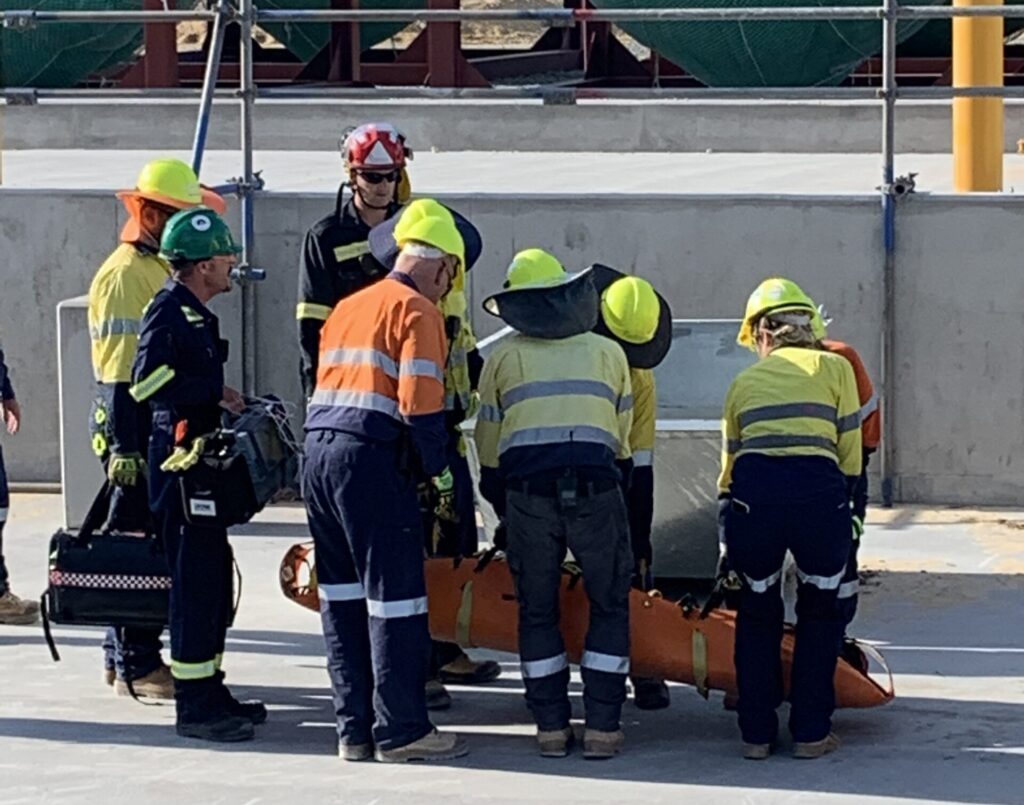
The RII41319 Certificate IV in Emergency Response Coordination is delivered through a combination of theoretical and practical components, led by experienced and qualified trainers who maintain current industry knowledge in fire, emergency response, and rescue operations.
The course is delivered through a combination of structured learning methods, including:
- Face-to-face practical training exercises
- Self-paced online learning modules
- Workplace-based training conducted in real or simulated work environments
- Blended learning activities, such as workplace simulations and digital assessments integrated with practical demonstrations
This blended approach provides flexibility while ensuring that students develop both the theoretical knowledge and hands-on practical skills required to demonstrate competency in emergency response and rescue operations.
This approach allows for flexibility while ensuring learners develop both the knowledge and hands-on skills required for competency in emergency response roles.
Assessment Methods
Assessment is conducted by qualified assessors using a combination of tools and methods, in accordance with the principles of assessment (fairness, flexibility, validity, reliability) and the rules of evidence (valid, sufficient, current, authentic). Students will be assessed as either Competent or Not Yet Competent based on their performance against the unit requirements.
Assessment methods may include:
- Direct observation of practical skills and tasks during training exercises
- Verbal questioning to assess underpinning knowledge
- Written responses to theory-based questions
- Portfolio evidence, including completed workplace documents or work samples
- A combination of the above methods, as appropriate for each unit
Evidence Collection
Evidence of competency is gathered throughout the course and may include:
- Completion of theory questions through structured learning plans in the Learning Management System (LMS)
- Observation checklists completed by the trainer during practical assessments
- Submission of portfolio evidence, such as workplace forms, reports, or documentation relevant to unit outcomes
This comprehensive approach ensures all students are assessed fairly, consistently, and in accordance with the unit requirements of the RII41319 Certificate IV in Emergency Response Coordination qualification.
Recognition of Prior Learning (RPL) and Credit Transfer (CT)
Parabellum International Training RTO (51786) offers Recognition of Prior Learning (RPL) for students who can demonstrate prior skills and experience relevant to the course outcomes. Students may also be eligible for Credit Transfer (CT) for units of competency they have previously completed through another Registered Training Organisation (RTO).
RPL and CT applications are assessed individually in accordance with our RPL/CT Policy and the requirements of the training package.
Issued by Parabellum International Training (RTO Code: 51786)
Students who successfully complete all training and assessment requirements of the course will be awarded the nationally recognised qualification:
RII41319 Certificate IV in Emergency Response Coordination
Graduates will receive a Testamur for the qualification, along with a Record of Results listing the units of competency achieved, which may include:
-
BSBMGT401 Show leadership in the workplace
-
RIIERR403E Lead rescue teams
-
RIIRIS401E Apply site risk management system
-
PMAOMIR320 Manage incident response information
-
PMAOMIR418 Coordinate incident response
-
PUAEMR032 Design emergency management exercises
-
PUAEMR036 Manage and evaluate emergency management exercises
-
PUAOPE015 Conduct briefings and debriefings
-
RIIERR503D Implement emergency preparedness and response systems
-
RIIERR601E Establish and maintain mine emergency preparedness and response systems
This qualification is issued in accordance with the Australian Qualifications Framework (AQF) and complies with the Standards for Registered Training Organisations (RTOs) 2025.
To express your interest or enquire about upcoming availability, please contact our team at training@parabellum.com.au.
To express your interest or enquire about upcoming availability, please contact our team at training@parabellum.com.au
Fill in the form and
we will be in touch!
"*" indicates required fields
Get in Touch
Enquire About Our Training Courses
Fill out the form below and you will be one step closer to your qualification.